5-Amino-1MQ Benefits: How This NNMT Inhibitor May Support Fat Loss and Metabolic Health

Disclaimer: This paper is for informational and educational purposes only, based on research available as of early 2026. It does not endorse the use of unapproved compounds. This information is for informational purposes only and does not replace professional medical advice. Always consult a licensed healthcare provider for concerns about your health.
Introduction
The compound 5-Amino-1-methylquinolinium (5-Amino-1MQ) is a synthetic, membrane-permeable small molecule that operates as a potent, selective inhibitor of nicotinamide N-methyltransferase (NNMT). In recent years, it has drawn significant attention in metabolic and anti-aging research due to its ability to modulate cellular energy pathways and target metabolic dysfunction.
Mechanism of Action
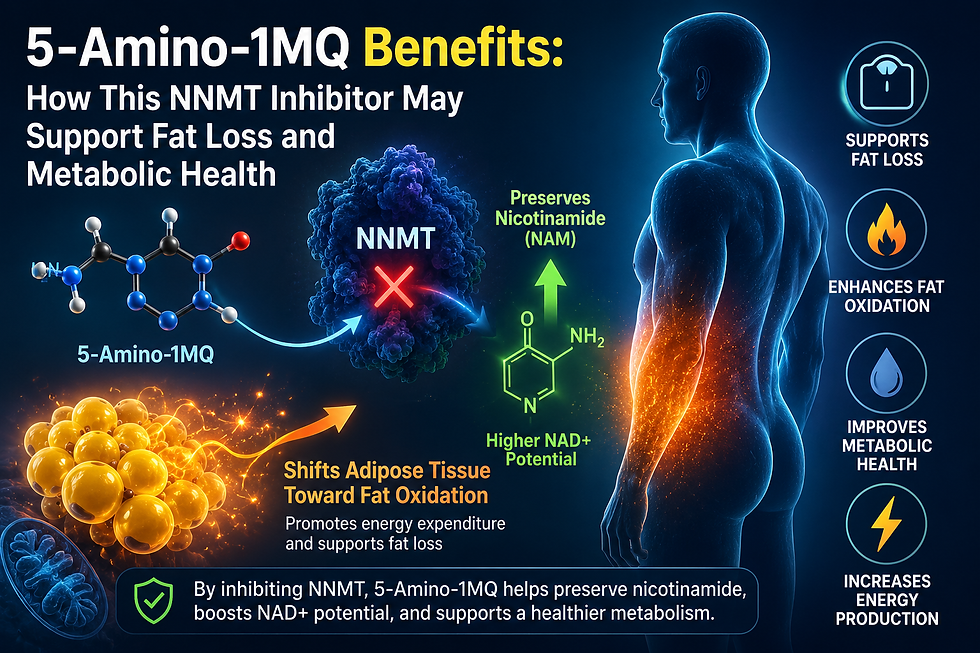
NNMT is an enzyme responsible for catalyzing the N-methylation of nicotinamide using S-adenosylmethionine (SAM) as a methyl donor, producing 1-methylnicotinamide (MNA). In metabolically compromised or aging tissues—particularly white adipose tissue—NNMT is often overexpressed. Its overexpression depletes cellular pools of nicotinamide, which disrupts the cell's ability to synthesize Nicotinamide Adenine Dinucleotide (NAD+) via the salvage pathway.
5-Amino-1MQ inhibits NNMT, preventing the depletion of nicotinamide. This conservation allows the cell to recycle it into NAD+ through the salvage pathway. The resulting restoration and elevation of NAD+ levels have several downstream metabolic consequences:
Increased Energy Expenditure: Higher NAD+ levels support mitochondrial function, increasing the resting metabolic rate of adipocytes.
Suppression of Lipogenesis: By altering the SAM-cycle and restoring energy balance, the compound limits the conversion of dietary energy into stored fat.
Enhanced Lipolysis: It facilitates the mobilization and utilization of stored lipids.
Preclinical Research and Metabolic Efficacy
The foundational in vivo data on 5-Amino-1MQ comes from pivotal preclinical models, such as diet-induced obese (DIO) mice. When administered, 5-Amino-1MQ has been shown to:
Reduce white adipose tissue mass and overall body weight.
Decrease the size of fat cells (adipocytes) by roughly 30–40%.
Lower blood insulin levels and improve systemic insulin sensitivity.
Importantly, these weight-loss and metabolic improvements occurred without any significant impact on daily food intake. Furthermore, researchers noted high selectivity, as the compound did not inhibit related SAM-dependent methyltransferases or critical enzymes in other pathways.
Muscle Function and Anti-Aging
Beyond its effects on fat cells, recent investigations have highlighted the role of NNMT inhibition in skeletal muscle. Research indicates that NNMT activity increases with age, which contributes to metabolic decline in muscle tissue. By inhibiting NNMT and preserving NAD+ pools, 5-Amino-1MQ has been shown in animal models to rejuvenate aged muscle stem cells (satellite cells), supporting muscle regeneration, improving contractile force, and increasing daily running distance.
Current Status and Safety Profile
While preclinical data demonstrates profound metabolic benefits, the compound remains primarily an experimental laboratory tool. As of mid-2026, there have been no published clinical trials evaluating the safety, efficacy, or long-term effects of 5-Amino-1MQ in humans. Therefore, it is not an FDA-approved therapeutic and falls strictly under the category of research chemicals or non-standard metabolic optimization protocols offered by select wellness clinics.
References
Neelakantan, H., et al. (2018). "Selective and membrane-permeable small molecule inhibitors of nicotinamide N-methyltransferase reverse high fat diet-induced obesity in mice." Biochemical Pharmacology, 147, 141-152.
Kraus, D., et al. (2014). "Nicotinamide N-methyltransferase knockdown protects against diet-induced obesity and is linked to an alteration in DNA methylation." Nature Medicine, 20(3), 295-303.
Wang, S., et al. (2021). "Reduced calorie diet combined with NNMT inhibition establishes a distinct microbiome in DIO mice." Scientific Reports, 11, 23788.


Comments